Monday, February 05, 2007
LEADING SCIENTIST PLEADS FOR SANE SCIENCE
Flux and soil variability are thrown in our faces whenever we ask for trading units of soil carbon. But one important US scientist has broken ranks with his colleagues to argue for sanity to prevail: "It is often pointed out that soils have a large amount of variability, but with knowledge of soil sciences and landscapes, variability can be described and sampling protocols can be developed to deal with this," writes Dr John Kimble in a paper published this year*. "One reason I feel people say that soils vary and SOC cannot be measured is that we soil scientists focus on showing variability, not on showing what we know about the variability. In soils we can go to a 100m2 field and sample every square meter and look at the differences we find. But if you sample every tree in a large area you would see a similar variability." Dr Kimble works for the US Department of Agriculture, National Resources Conservation Service, National Soil Survey Centre, Lincoln, Nebraska. "We too often focus on this [variability], worry about laboratory precision and field variation and do not look at the real world where most things are based on averages and estimated data. We tend to focus on finding variation and not on using our knowledge of soil science to describe what we know. All systems vary, but in soils we focus on a level of precision and accuracy that may not have any relevance to the real world because we can take so many samples and look at the variation." We need a half dozen more like this.
*Kimble, J., "Advances In Models To Measure Soil Carbon: Can Soil Carbon Really Be Measured?", in Lal, R., Cerri, C., Bernoux, M., Etchevers, J., and Cerri, E., eds., Carbon Sequestration in Soils in Latin America, Food Products Press, Birmingham, NY, 2006
OUR JOURNEY IN SEARCH OF SOIL SCIENCE SANITY

On 17 September, Co-convenors of the Carbon Coalition Against Global Warming Michael & Louisa Kiely left for a 3 week fact finding mission to the USA where soil sequestration is at the forefront of the agenda of many soil scientists and there is a 'can do' attitude.
The itinierary was as follows:
18/19 September: Washington DC - 2006 Global CO2 Cap-And-Trade Forum
21/22 September: Bozeman, Montana - Big Sky Carbon Sequestration Partnership Phase 2 Project Management Plan Workshop
25 September: College Station, Texas - Professor Bruce McCarl, Department of Agricultural Economics, Texas A&M University
27 September: Albuquerque, New Mexico - Peter Holter, Holistic Management International
28 September: Albuquerque, New Mexico - Southwest Carbon Sequestration Partnership Phase 2 Project Management Plan Workshop
29 September: Swanton, Vermont - Address Farmers' gathering organised by Coalition member Abe Collins from Vermont.
1 October: Columbus, Ohio - Professor Rattan Lal, Ohio State University
3rd October: Chicago Illinois - Chicago Climate Exchange
 Susan Capalbo (right) is Director of Big Sky Carbon Sequestration Partnership. Pamela Tomski is Associate Director responsible for outreach and education. Big Sky is closest to finding the answer the Coalition seeks to the question: how and when will we be able to measure the carbon sequestered in soils as a result of changes in land management sufficient to trade carbon credits? The Big Sky Carbon Sequestration Partnership was set up to "build a new energy future" for Montana, Idaho, South Dakota, Wyoming, the Pacific Northwest and the nation. Led by Montana State University, the Big Sky Partnership is one of the U.S. Department of Energy's (DOE) seven regional partnerships.

Dave Brown is Technical Lead, Terrestrial Sequestration with Big Sky. He revealed to us that the secret is not to try and measure the finite amount of carbon in the soil, but the difference over time.

Ted Dodge heads up the National Carbon Offsets Coalition which brokered the first carbon credits paid to US farmers In Montana and Kansas. He wants to work closely with us.

Our journey continues... FromDC to Montana to Texas to New Mexico to Vermont, then onto Columbus, Ohio and Chicago, then to San Diego, LA, then home...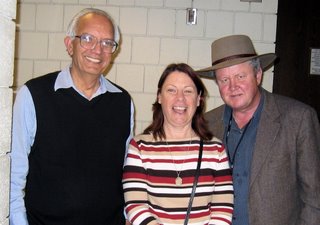 We have had such luck, miraculously passing through walls and getting in to see the people who are at the very core of the issue of soil carbon sequestration MMV (measurement, monitoring and verification). The most significant figure in the soil C science field anywhere in the world (so significant his colleagues had to create an award to recognise his contribution) is Dr Rattan Lal, author of a small library of books and papers, co-author of many others, Professor of Soil Physics at the School of Natural Resources at Ohio State University, Columbus OH. He is a softly-spoken gentleman who exudes knowledge like a perennial plant's root system exudes the raw materials of soil carbon. He gave us many insights which we will share with you in a later post. Suffice it to say, the penny dropped! Dr Lal started his career working in Australia, at Sydney University, in the early 1970s. We also met Dr Lal's colleague from Germany, Dr Klause Lorenz whose research throws the glomalin issue into question. He knows of a myriad of constituents of soil carbon and his work is focussed on the most stable carbon stored in deep layers of soils.
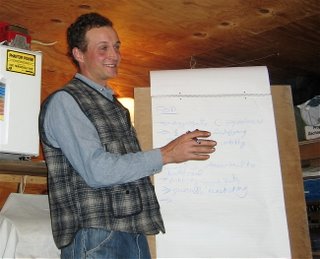 "Abe of Vermont", our first American member, was as inspiring to meet as was Dr Lal. Abe Collins has largely taught himself an amazing amount about soil management. Much of his knowledge is unconventional, bordering on the 'plumb loco'. But he is living everyday with the soil, listening to the landscape, and observing the rhythms of the soil biota so he has an advantage over more casual observers. He share farms on a dairy at Stanton, Vermont. He uses (and teaches) holistic management, keyline farming and subsoil irrigation. You'll also hear more about this remarkable fellow and his inspiring family in an upcoming post.
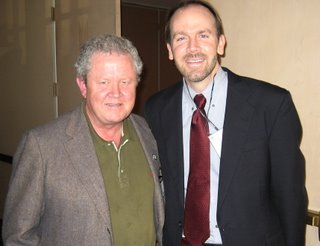
Dr Brian McPherson, from the New Mexico Institute of Technology in Socorro, heads up the Southwest Regional Partnership, one of seven regional partnerships charged with evaluating available technologies to capture and to reduce CO2 emissions. The Partnership encompasses: Arizona, Colorado, Oklahoma, New Mexico, Utah, and portions of Kansas, Nevada, Texas, and Wyoming. The partners represent 21 State government agencies and universities, electric utilities, oil and gas companies, non-governmental organizations, the Navajo Nation, and federal agencies. We attended the Partnership's Phase 2 Workshop in Albuqurque, New Mexico, and heard presentations from their geologic and terrestrial (soil) sequestration experts. Dr McPherson invited us to address the gathering of 60 or so scientists and we shared with them some of the aggressive carbon farming techniques developed by Australian 'farmer scientists'. (More of that later.)

Dr Joel Brown and Dr Jay Angerer are the 'soil carbon sequestration' experts with the Southwest Partnership. Joel was on our list of 'must see' people. He has spent 7 years working in Australia. Joel and Jay were the best-dressed soil scientists we met in the USA. Their project involves riparian zone reclamation in arid and semiarid regions. A full report on the core content of our study tour will be published here as soon as we have a moment to write it up.
Professor Bruce McCarl of Texas A&M University is on the Inter-Governmental Panel on Climate Change and he believes soils have a key role to play in the next 50 years. Biofuels are also his hot topic.
*Kimble, J., "Advances In Models To Measure Soil Carbon: Can Soil Carbon Really Be Measured?", in Lal, R., Cerri, C., Bernoux, M., Etchevers, J., and Cerri, E., eds., Carbon Sequestration in Soils in Latin America, Food Products Press, Birmingham, NY, 2006
OUR JOURNEY IN SEARCH OF SOIL SCIENCE SANITY

On 17 September, Co-convenors of the Carbon Coalition Against Global Warming Michael & Louisa Kiely left for a 3 week fact finding mission to the USA where soil sequestration is at the forefront of the agenda of many soil scientists and there is a 'can do' attitude.
The itinierary was as follows:
18/19 September: Washington DC - 2006 Global CO2 Cap-And-Trade Forum
21/22 September: Bozeman, Montana - Big Sky Carbon Sequestration Partnership Phase 2 Project Management Plan Workshop
25 September: College Station, Texas - Professor Bruce McCarl, Department of Agricultural Economics, Texas A&M University
27 September: Albuquerque, New Mexico - Peter Holter, Holistic Management International
28 September: Albuquerque, New Mexico - Southwest Carbon Sequestration Partnership Phase 2 Project Management Plan Workshop
29 September: Swanton, Vermont - Address Farmers' gathering organised by Coalition member Abe Collins from Vermont.
1 October: Columbus, Ohio - Professor Rattan Lal, Ohio State University
3rd October: Chicago Illinois - Chicago Climate Exchange
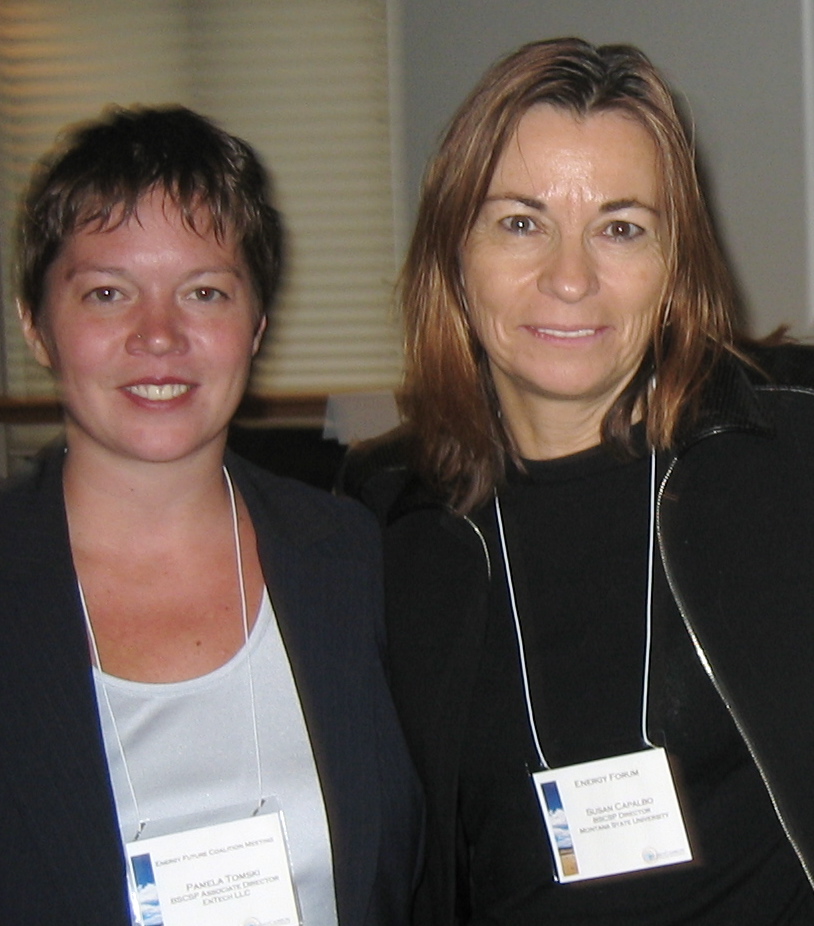 Susan Capalbo (right) is Director of Big Sky Carbon Sequestration Partnership. Pamela Tomski is Associate Director responsible for outreach and education. Big Sky is closest to finding the answer the Coalition seeks to the question: how and when will we be able to measure the carbon sequestered in soils as a result of changes in land management sufficient to trade carbon credits? The Big Sky Carbon Sequestration Partnership was set up to "build a new energy future" for Montana, Idaho, South Dakota, Wyoming, the Pacific Northwest and the nation. Led by Montana State University, the Big Sky Partnership is one of the U.S. Department of Energy's (DOE) seven regional partnerships.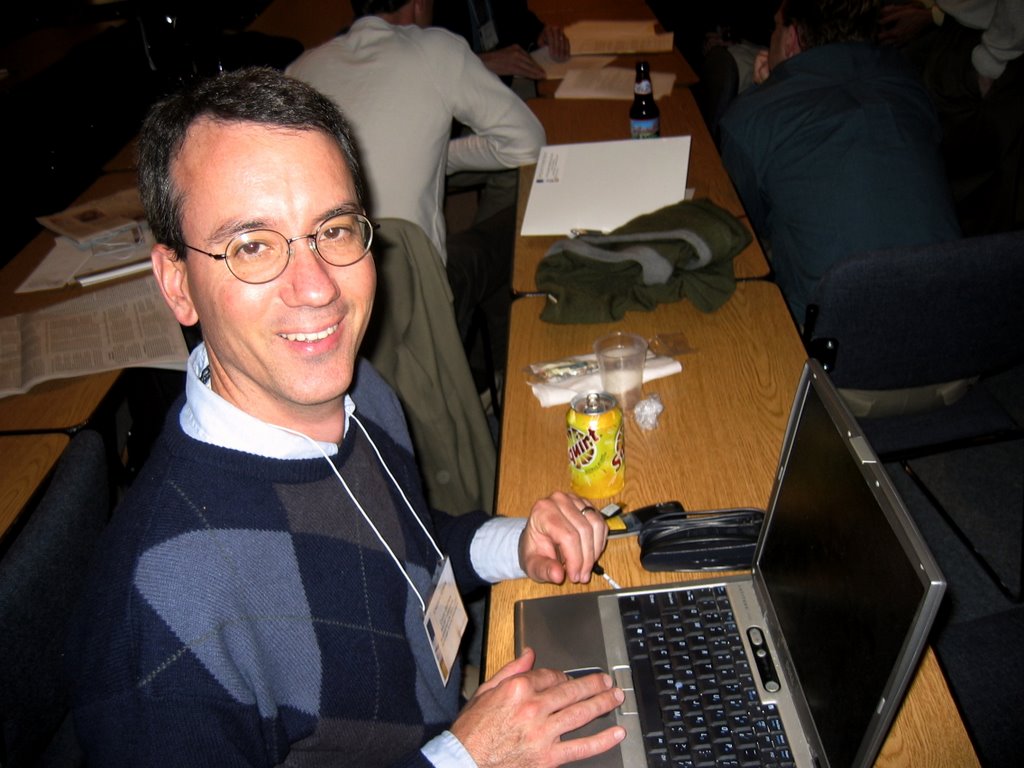
Dave Brown is Technical Lead, Terrestrial Sequestration with Big Sky. He revealed to us that the secret is not to try and measure the finite amount of carbon in the soil, but the difference over time.

Ted Dodge heads up the National Carbon Offsets Coalition which brokered the first carbon credits paid to US farmers In Montana and Kansas. He wants to work closely with us.

Our journey continues... FromDC to Montana to Texas to New Mexico to Vermont, then onto Columbus, Ohio and Chicago, then to San Diego, LA, then home...
 We have had such luck, miraculously passing through walls and getting in to see the people who are at the very core of the issue of soil carbon sequestration MMV (measurement, monitoring and verification). The most significant figure in the soil C science field anywhere in the world (so significant his colleagues had to create an award to recognise his contribution) is Dr Rattan Lal, author of a small library of books and papers, co-author of many others, Professor of Soil Physics at the School of Natural Resources at Ohio State University, Columbus OH. He is a softly-spoken gentleman who exudes knowledge like a perennial plant's root system exudes the raw materials of soil carbon. He gave us many insights which we will share with you in a later post. Suffice it to say, the penny dropped! Dr Lal started his career working in Australia, at Sydney University, in the early 1970s. We also met Dr Lal's colleague from Germany, Dr Klause Lorenz whose research throws the glomalin issue into question. He knows of a myriad of constituents of soil carbon and his work is focussed on the most stable carbon stored in deep layers of soils.
 "Abe of Vermont", our first American member, was as inspiring to meet as was Dr Lal. Abe Collins has largely taught himself an amazing amount about soil management. Much of his knowledge is unconventional, bordering on the 'plumb loco'. But he is living everyday with the soil, listening to the landscape, and observing the rhythms of the soil biota so he has an advantage over more casual observers. He share farms on a dairy at Stanton, Vermont. He uses (and teaches) holistic management, keyline farming and subsoil irrigation. You'll also hear more about this remarkable fellow and his inspiring family in an upcoming post.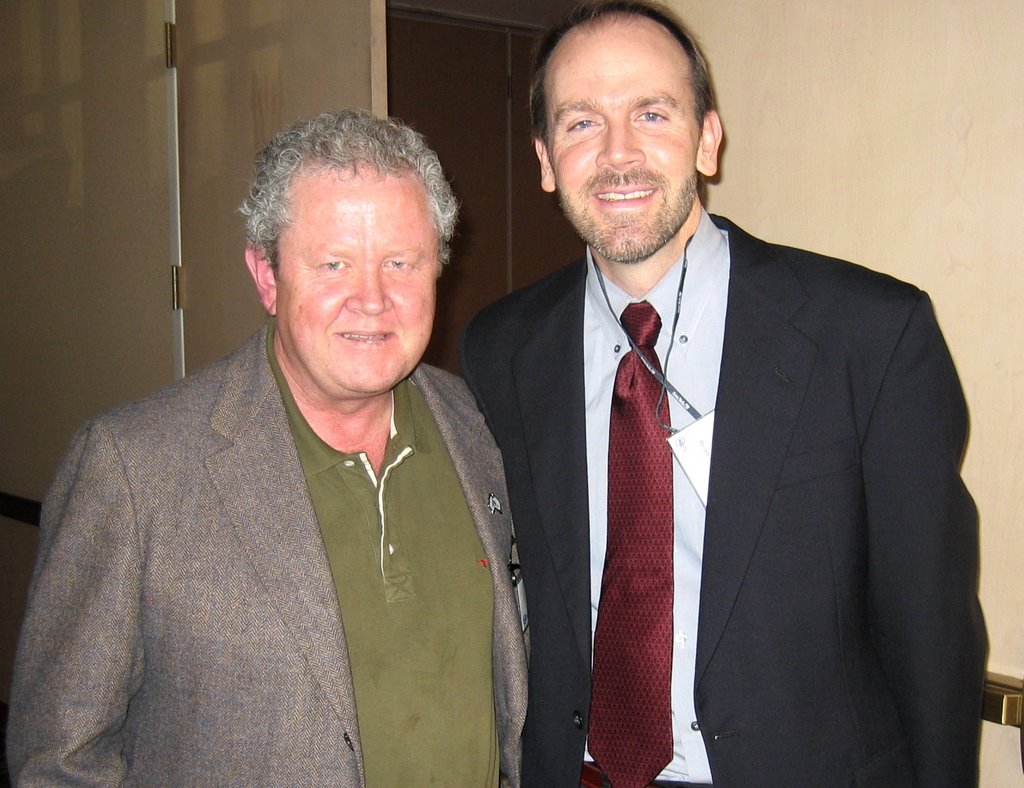
Dr Brian McPherson, from the New Mexico Institute of Technology in Socorro, heads up the Southwest Regional Partnership, one of seven regional partnerships charged with evaluating available technologies to capture and to reduce CO2 emissions. The Partnership encompasses: Arizona, Colorado, Oklahoma, New Mexico, Utah, and portions of Kansas, Nevada, Texas, and Wyoming. The partners represent 21 State government agencies and universities, electric utilities, oil and gas companies, non-governmental organizations, the Navajo Nation, and federal agencies. We attended the Partnership's Phase 2 Workshop in Albuqurque, New Mexico, and heard presentations from their geologic and terrestrial (soil) sequestration experts. Dr McPherson invited us to address the gathering of 60 or so scientists and we shared with them some of the aggressive carbon farming techniques developed by Australian 'farmer scientists'. (More of that later.)

Dr Joel Brown and Dr Jay Angerer are the 'soil carbon sequestration' experts with the Southwest Partnership. Joel was on our list of 'must see' people. He has spent 7 years working in Australia. Joel and Jay were the best-dressed soil scientists we met in the USA. Their project involves riparian zone reclamation in arid and semiarid regions. A full report on the core content of our study tour will be published here as soon as we have a moment to write it up.
Professor Bruce McCarl of Texas A&M University is on the Inter-Governmental Panel on Climate Change and he believes soils have a key role to play in the next 50 years. Biofuels are also his hot topic.


